

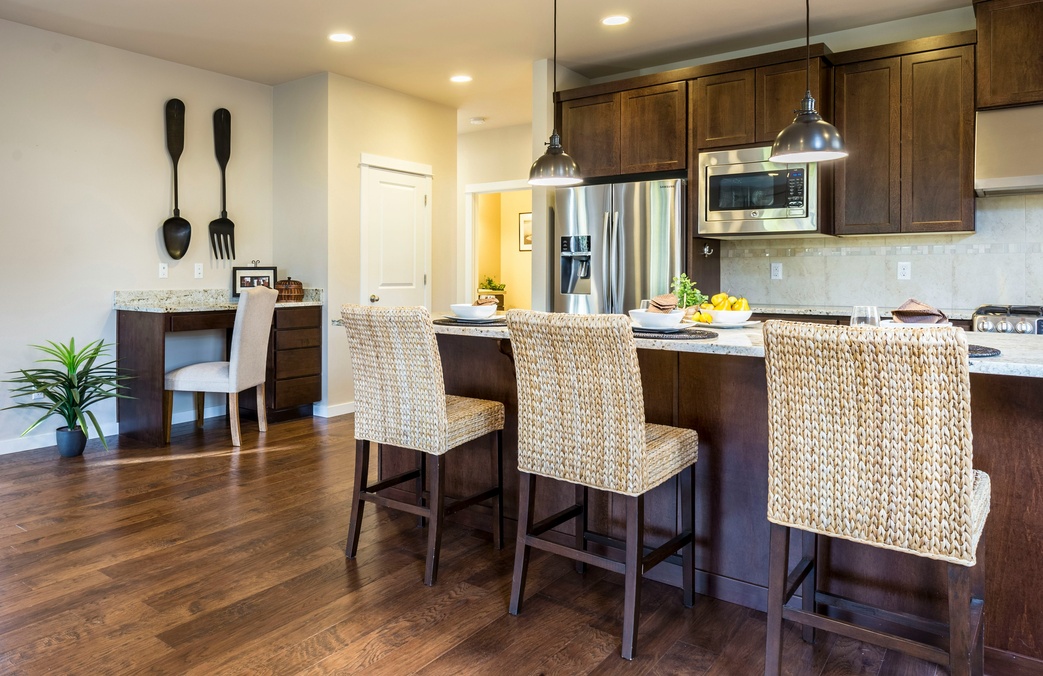
Kitchens are one of the busiest rooms in any home. People cook, gather, entertain, and move constantly throughout the day. Because of that, many homeowners question whether hardwood flooring is really the right fit for a kitchen.
The answer is yes, but homeowners should understand both the benefits and the challenges before installation begins.
Hardwood flooring brings warmth, character, and timeless style into a kitchen. It also creates a seamless look between kitchens, dining rooms, and living spaces, which is especially popular in open-concept homes. Still, kitchens expose flooring to moisture, spills, heavy foot traffic, and dropped objects, so choosing the right hardwood product matters.
At Cherokee Floor Covering, we have spent more than 30 years helping homeowners choose flooring that fits their lifestyle and design goals. With knowledgeable staff, professional installers, and a full-time service department, we help customers make informed flooring decisions that last.
Is hardwood flooring a good option for kitchens?
Hardwood flooring can work very well in kitchens when homeowners choose the right product and maintain it properly.
Many homeowners prefer hardwood because it creates a warmer and more inviting feel compared to tile or other hard surfaces. Hardwood also helps create visual continuity throughout the home, especially when the same flooring extends into nearby living areas.
However, kitchens place more stress on flooring than many other rooms in the house.
Moisture, chair movement, food spills, and heavy traffic can all impact hardwood over time. That is why product selection and professional hardwood floor installation are so important.
What type of hardwood flooring works best in kitchens?
Engineered wood flooring is often the best choice for kitchens because it offers greater stability when humidity and moisture levels fluctuate.
Unlike solid hardwood, engineered wood flooring is made with multiple layers that help reduce expansion and contraction caused by moisture changes. Since kitchens naturally experience temperature swings and humidity, that added stability can help prevent future issues.
Solid hardwood can still work in kitchens, especially in homes with controlled indoor humidity, but it may react more noticeably to seasonal changes.
The wood species also matters. Harder wood species generally perform better in kitchens because they resist dents and wear more effectively.
Popular hardwood options for kitchens include:
White oak
Hickory
Maple
Red oak
White oak flooring is especially popular because it combines durability with a clean, modern appearance.
How does moisture affect hardwood flooring in kitchens?
Moisture is the biggest concern homeowners should think about before installing hardwood flooring in a kitchen.
Small spills are usually not a problem when cleaned up quickly. Long-term moisture exposure is where problems begin. Leaks from dishwashers, refrigerators, or sinks can cause hardwood flooring to swell, warp, or stain if left untreated.
Before hardwood floor installation begins, professional installers should always test moisture levels in both the subfloor and the surrounding environment. Proper preparation plays a major role in how hardwood flooring performs over time.
Georgia weather can also affect hardwood. Humid summers and dry indoor winter conditions naturally impact wood, which is why flooring should be properly acclimated before installation.
Our experienced hardwood flooring installation teams pay close attention to these details because proper preparation helps reduce future flooring problems.
What hardwood finish works best in kitchens?
The finish homeowners choose can affect both appearance and maintenance.
Many homeowners prefer matte or low-gloss finishes because they hide scratches, dust, footprints, and pet hair better than high-gloss finishes.
Textured hardwood styles can also help disguise everyday wear. Wire-brushed and hand-scraped finishes often conceal dents and surface scratches more effectively than smooth finishes.
Color selection matters too. Very dark floors may show crumbs, dust, and scratches more easily, while extremely light floors may reveal dirt and traffic patterns faster.
For many kitchens, medium-toned hardwood floors provide the best balance between style and practicality.
Should hardwood flooring go under kitchen cabinets?
In many kitchens, homeowners choose to install hardwood flooring beneath cabinets for a cleaner and more seamless appearance.
Installing flooring under cabinets can also provide more flexibility during future remodeling projects.
However, every kitchen is different. Factors like cabinet weight, appliance height, floor transitions, and layout may influence installation decisions. Working with experienced flooring professionals helps homeowners avoid costly installation mistakes later.
How can homeowners protect hardwood flooring in a kitchen?
Daily maintenance habits can make a major difference in how hardwood flooring performs over time.
Homeowners can help protect their kitchen hardwood floors by following a few simple practices:
Clean spills immediately
Use felt pads under chairs and stools
Place rugs near sinks and entryways
Sweep regularly to remove debris
Avoid excessive water during cleaning
Use hardwood-approved cleaning products
One of the most common causes of wear in kitchens comes from chairs scraping across the floor near islands and dining areas. Felt pads are inexpensive, but they can significantly reduce scratching.
What should homeowners expect during hardwood floor installation?
Kitchen hardwood flooring installation requires careful planning and preparation.
Depending on the project, old flooring may need to be removed before installation begins. Appliances may also need to be temporarily moved during the process.
Subfloor preparation is especially important because uneven surfaces can affect the appearance and performance of hardwood flooring later.
Homeowners should also expect limited kitchen access during installation. The timeline depends on the size of the kitchen and the flooring product being installed.
Working with an experienced hardwood flooring company can make the process much smoother. Our experienced staff and professional installers help homeowners feel confident throughout every stage of the project.
Why do homeowners continue choosing hardwood flooring for kitchens?
Many homeowners continue choosing hardwood flooring for kitchens because the look and feel are difficult to replicate with other flooring materials.
Hardwood flooring creates warmth, comfort, and timeless style that works with both traditional and modern kitchen designs. It also remains highly desirable among homebuyers, which may help support long-term home value.
When homeowners choose the right hardwood product, maintain it properly, and work with experienced installers, hardwood flooring can perform beautifully in kitchen spaces for many years.
Contact our hardwood flooring company today
If you are considering hardwood flooring for your kitchen or another room in your home, the team at Cherokee Floor Covering can help you explore options that fit your home, lifestyle, and design preferences. We serve Woodstock, Marietta, Canton, Acworth, and Kennesaw, GA, from our showroom in Woodstock, GA.


