

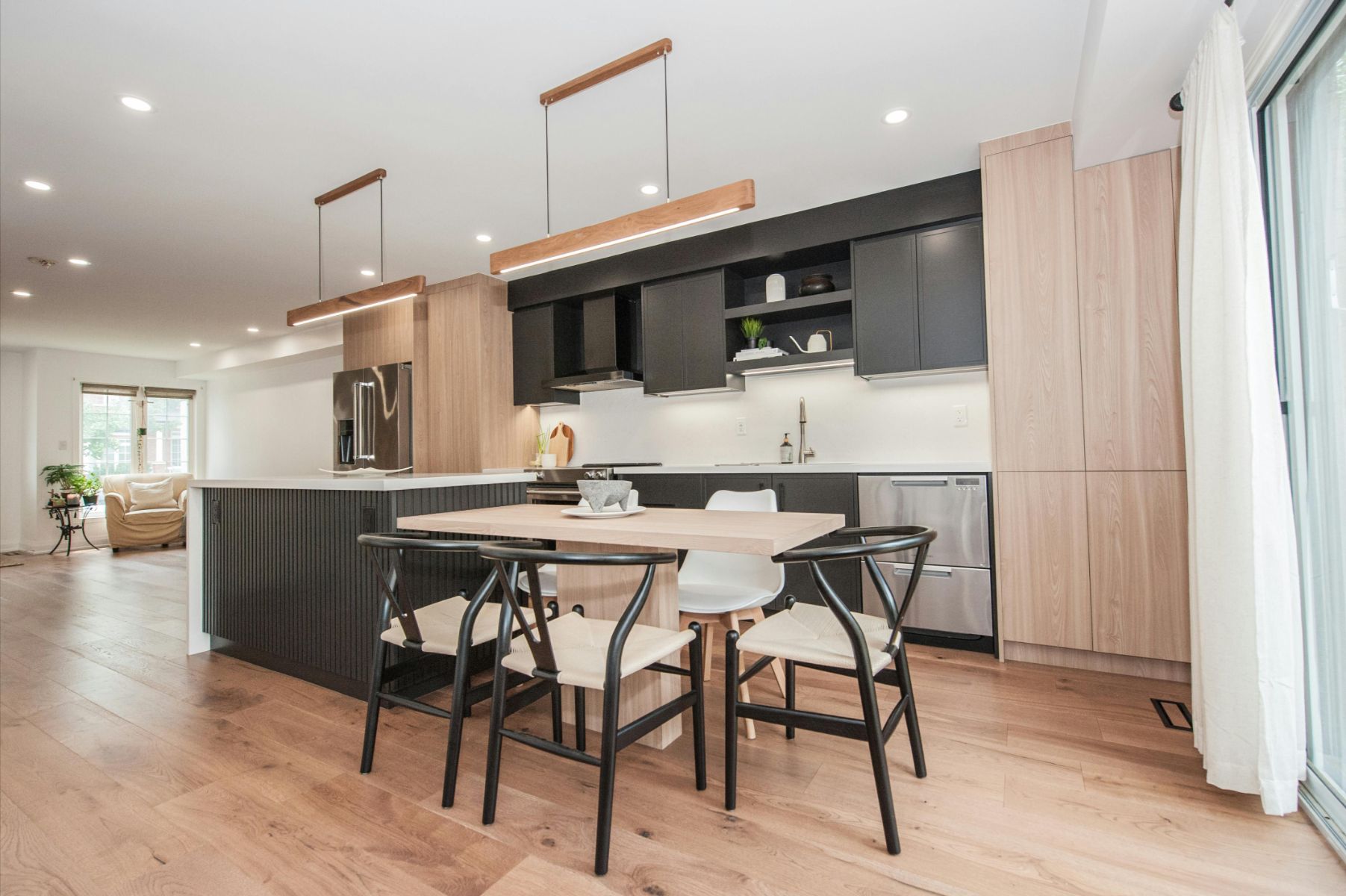
Hardwood flooring can completely change the look and feel of a home. But before those beautiful planks are installed, there is an important step that should not be rushed: acclimation. Hardwood is a natural material that reacts to its surroundings, including changes in temperature and humidity. Giving it enough time to adjust can help prevent problems after installation. At Cherokee Floor Covering, we help people understand the entire hardwood flooring process, including how long hardwood should acclimate and why the right conditions matter.
How long should hardwood flooring acclimate before installation?
There is no single acclimation period that works for every hardwood floor. In many cases, hardwood flooring may need to acclimate for at least three days, but some products and homes require longer.
The correct amount of time depends on the flooring manufacturer, wood species, construction, moisture levels, and conditions inside your home. Instead of relying only on a set number of days, installers should consider whether the flooring has reached an appropriate moisture balance with its environment.
That is why professional guidance matters. Manufacturer instructions should always be followed because different hardwood products can have very different acclimation requirements.
Why does hardwood flooring need to acclimate?
Wood naturally absorbs and releases moisture. When humidity rises, hardwood can take on moisture and expand. When the surrounding air becomes drier, it can release moisture and contract.
Your flooring may have been stored in a warehouse or transported through conditions that are different from those inside your Woodstock home. Installing it immediately can create unnecessary stress on the wood.
Acclimation gives the hardwood time to adjust before it is secured to the subfloor. Proper preparation can reduce the risk of excessive gaps, cupping, buckling, or other movement after installation.
What factors affect the acclimation time for hardwood flooring?
Several variables determine how long wood floors need to acclimate. One of the biggest is the type of flooring.
Solid wood floors generally respond more noticeably to changes in moisture and humidity because each plank is made from a solid piece of wood. Engineered hardwood has a layered construction that provides greater dimensional stability, although it still needs to be handled according to the manufacturer's requirements.
Wood species also matter. Some species react to environmental changes faster than others. Plank width, moisture content, local conditions, and the home's heating and cooling system can also affect the process.
In short, three days may be enough for one floor but not another.
How should hardwood flooring be acclimated?
Hardwood should be brought into the space where it will be installed and stored according to the manufacturer's directions. The home should already be close to its normal living conditions.
Heating and cooling systems should generally be operating as they normally would. This gives the hardwood a chance to adjust to realistic indoor temperatures and relative humidity rather than temporary construction conditions.
Depending on the product, cartons may need to remain closed, be opened, or have planks arranged in a particular way. Avoid assuming that every hardwood product should be stacked or unpacked the same way. Always follow the specific manufacturer's instructions.
How do moisture levels affect hardwood acclimation?
Time alone does not tell the entire story. Moisture is a key part of deciding whether hardwood flooring is ready for installation.
Professional installers can use moisture meters to compare the moisture content of the hardwood with the subfloor and surrounding conditions. The acceptable difference can depend on the flooring type, plank width, subfloor, and manufacturer requirements.
This is more reliable than simply saying, "The flooring has been inside for three days, so it must be ready." Acclimation is about reaching suitable conditions, not just watching the clock.
Does engineered hardwood flooring need to acclimate?
Yes, engineered hardwood may still require acclimation, although requirements vary by manufacturer and product.
Engineered hardwood flooring is designed with multiple layers, which generally makes it more dimensionally stable than solid hardwood. That does not mean it should automatically be installed as soon as it arrives.
Some engineered products require a specific acclimation period, while others have different instructions. Check the manufacturer's installation guidelines before opening cartons or preparing the material.
What happens if hardwood flooring does not acclimate properly?
Skipping or rushing acclimation can contribute to flooring problems. If the hardwood is too dry when installed, it may absorb moisture and expand afterward. If it contains too much moisture, it can shrink as it adjusts to a drier home.
Possible problems include noticeable gaps between boards, cupping, crowning, buckling, or boards that no longer sit as intended. While moisture-related flooring issues can have several causes, proper acclimation helps reduce avoidable movement.
Taking extra time before the hardwood flooring installation is much easier than dealing with a damaged floor later.
Should the subfloor be checked before hardwood installation?
Absolutely. Acclimating the hardwood is only one part of moisture management.
The subfloor should also be evaluated before installation. Excess moisture in wood or concrete subfloors can affect the finished floor, even when the hardwood itself has acclimated correctly.
Professional installers can check conditions and determine whether additional preparation or moisture-control measures are needed.
This careful preparation creates a better foundation for a hardwood floor that looks great and performs well over time.
Get expert hardwood flooring installation in Woodstock, GA
Hardwood flooring acclimation is not about choosing an arbitrary number of days. It is about making sure the flooring, subfloor, and home are ready for installation. Product requirements, moisture levels, humidity, and wood construction all play a role.
Cherokee Floor Covering has served customers from our current location for 30 years, backed by knowledgeable employees, professional installers, and a full-time service department. If you are planning new hardwood flooring, call or stop by our showroom. Our wood flooring store in Woodstock, GA, serves Woodstock, Marietta, Canton, Acworth, and Kennesaw, GA.


